

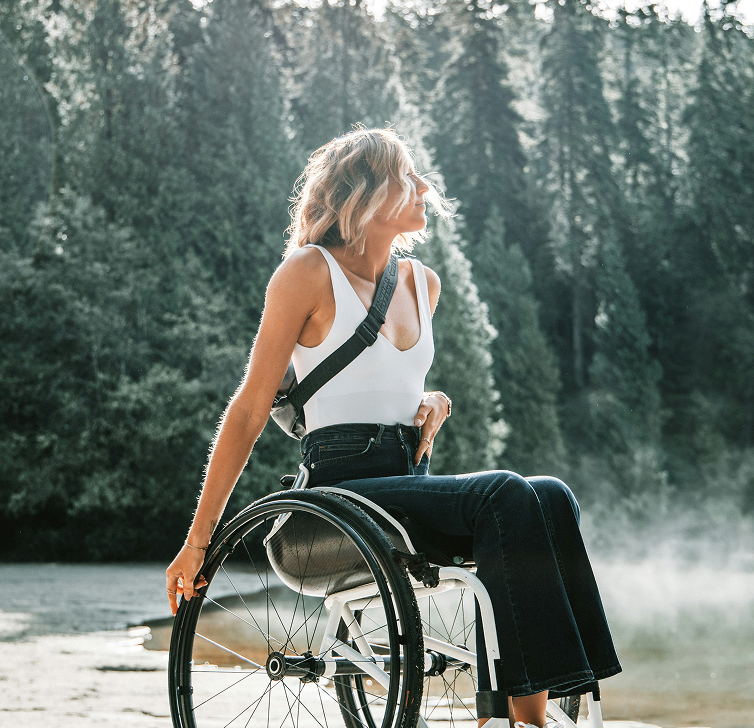
Finding Freedom in Motion — From Beaches to Playgrounds to Ski Slopes
From adaptive trikes to sit skis, here's how different equipment has opened doors to play and exploration for our family — and what we've learned along the way.
Experience
April 25, 2026
For our family, some of the most meaningful moments come when our son can join his siblings and peers in everyday play and outdoor adventures. Over the years, we've tried different types of adaptive equipment — each one offering new possibilities, new challenges, and new memories.
The Rifton Mobile Stander
The Rifton Mobile Stander has been a bridge between therapy and play. It gives our son upright positioning with full support, while letting him move around independently using large wheels. For us, it wasn't about speed, but about perspective — being at eye level with friends in the classroom or at home, and having some independence to explore.
Why it matters: It blurs the line between therapy and everyday life, giving kids a way to stand, interact, and move at the same time.
The Amtryke Adaptive Tricycle
Our adaptive tricycle has been a joy. With its fixed-drive pedals, our son builds strength and coordination while feeling the thrill of riding just like other kids. We've used it for years, and it's become part of family bike rides. The push handle and attendant brake add safety, while accessories like foot straps and supportive seats make it accessible.
Why it matters: It gives both therapeutic benefit and pure fun, helping our son ride alongside his siblings.
The Vipamat Hippocampe All-Terrain Wheelchair
The Hippocampe has opened up places we thought were off-limits: beaches, trails, even shallow water. With mountain bike tires and a balloon front wheel, we've used it for water play up to 2–3 feet deep. It's not self-propelled for most kids, but it's lightweight, portable, and adaptable — with ski kits, balloon wheels, and other accessories available.
Why it matters: It makes the outdoors — sand, snow, and trails — possible again.
Sit Skis: Dynamique and FFS Dual Ski
Adaptive ski programs have been an incredible gift. Certified instructors and experienced volunteers escort sit skiers down the mountain, making it safe even for children who are nonverbal or have limited motor control. Emily even trained with our son's instructors to take him down herself. The Dynamique felt responsive and rider-centered, while the FFS was heavier but program-durable.
Why it matters: Skiing isn't just about speed — it's about joy, confidence, and inclusion. Watching him glide down the slopes with a grin was unforgettable.
Takeaway
Every piece of adaptive equipment has its quirks, costs, and challenges — but each has expanded what our family thought was possible. Whether standing tall in a classroom, pedaling on a bike path, splashing at the beach, or skiing down a mountain, these tools have given our son a chance to move, explore, and belong.
Has your family had a similar experience? Join the NextAbilities community to share your story, connect with other families, and discover what's worked for others.

Join the conversation — connect with families and care teams who've been there
Share your Experience
Has your family navigated a similar decision? Connect with others who've been through it.

300+
Families helped
$23M
Money Donated

300+
Families helped