

The Baclofen Pump: Our Family's Journey
When doctors recommended a baclofen pump for our son, we asked questions and explored stepwise options — oral baclofen first, then an LP test dose. Here's what we learned, and the questions that helped us decide.
March 26, 2026
Why It Matters
For children with cerebral palsy (CP), managing spasticity (tight, stiff muscles) or dystonia (involuntary muscle contractions) is often a lifelong challenge. Treatments like physical therapy, orthotics, and medications aim to reduce pain, improve function, and prevent long-term complications such as joint deformities or premature arthritis.
Baclofen — a medication that relaxes muscles by acting on the nervous system — is one of the most common treatments for spasticity. While oral baclofen can help, its effectiveness may be limited by side effects or the amount of drug that reaches the spinal cord. For some children, doctors recommend an intrathecal baclofen (ITB) pump — a surgically implanted device that delivers medication directly into the spinal fluid, providing more targeted relief with lower doses.

These are complex decisions with long-term implications. Our family’s experience highlights the importance of asking questions, exploring stepwise options, and working collaboratively with the care team.
Our Experience
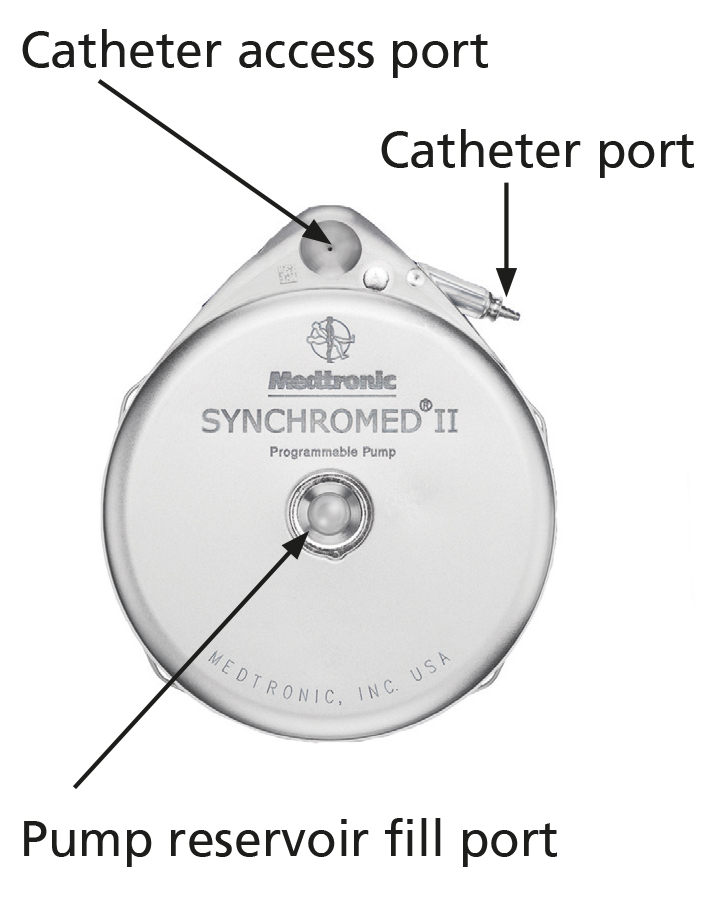
Several years ago, during a large care team consult with more than ten specialists — including neurologists, orthopedic and spine surgeons, physiatrists, and therapists — the baclofen pump was recommended for our son, Seb. The device is about the size of a hockey puck and is typically implanted under the skin of the abdominal wall, which connects to a catheter that travels under the skin to deliver medication directly into the spinal fluid. Because Seb is quite thin, it would have been a very tight fit. The pump also requires surgery to place it, routine refills at specialized centers (available only at a limited number of hospitals), and carries risks of infection or complications from (rare) mechanical issues with the pump or tubing.
We asked if there was any way to trial baclofen before committing to such a major intervention. The team then suggested oral baclofen, which Seb began at a very low dose. Over the next 6–12 months, his dosage was gradually increased several times as he tolerated it well and we saw meaningful benefits in tone and comfort.
About a year later, when discussing whether there were other options to help manage his tone, the team proposed a lumbar puncture (LP) to deliver a "test dose" of intrathecal baclofen — essentially a way to preview how Seb might respond if the medication were delivered directly into his spinal fluid, as it would be with a pump. This step came after he had demonstrated good tolerance to oral baclofen. For this test dose, we went to the hospital in the morning, had a 15-20min evaluation by the physiatrist and physical therapist, and then Seb underwent general anesthesia to have the LP test dose administered. After he’d recovered from anesthesia, we waited a few hours for the baclofen to take effect, and then the physiatrist and physical therapist repeated their evaluation. Following the LP test dose, Seb’s legs in particular were much weaker, which made it very difficult for him to stand and take steps as he’d done before the test dose. This helped us understand that like many people with dystonia, he uses some of his increased tone to supplement the strength of his muscles in his legs. For him, this meant that a baclofen pump may not offer increased benefits compared to the oral baclofen. Based on this result, we collaborated with his care team and ultimatedly decided that the implantable pump wasn’t a great option for Seb.
Looking back, we’re grateful this stepwise process allowed us to avoid surgery and its potential complications, while still benefiting from oral baclofen.
It’s worth noting that early on, it was almost impossible for us to find and talk to other families who had experience with the pump. We searched YouTube, Reddit, and even reached out to friends at Medtronic (the manufacturer of the device), but found little firsthand guidance. This gap — not being able to easily connect with others who had faced the same decision — was one of the drivers behind starting NextAbilities. We hope by sharing openly, we can make these paths clearer for other families.
Questions to Ask Your Care Team
When baclofen or a baclofen pump is first recommended, here are some questions that helped us:
- Would it make sense to trial baclofen in some other way first? Is there an oral option, for example?
- Could a lumbar puncture (LP) test dose help predict whether the pump would be effective for my child?
- How well would the pump be expected to treat spastic vs dystonic CP in my child’s case?
- What are the risks of infection, device malfunction, or complications over time?
- How does your hospital’s infection rate compare to other hospitals?
- Does my child use any equipment that might be affected by the pump implant location? (e.g., seat belt, feeding tube, walker hip prompts, or harnesses)
- How often would refills be required, and where could those be done?
- What happens if there’s a disruption in the healthcare system, our medical insurance, or something else that makes it difficult or impossible to make it to a refill appointment?
- If we try oral baclofen first, what should we watch for in terms of side effects or benefits?
- If we trial intrathecal baclofen and it doesn’t work, what are the other options?
Takeaway
Every child’s needs are different. For Seb, a stepwise approach — oral baclofen, then an LP test dose — meant avoiding an implant and surgery while still gaining real benefits. For other families, a pump may be the right option.
I’m not a medical professional, but my wife is a physician, and we went through this decision together as parents. We share this story with respect for the incredible clinicians who guided us, and with hope that it helps other families feel empowered to ask questions and find the right fit for their child.
📘 Glossary
- Baclofen – A medication that helps reduce muscle stiffness and spasticity by acting on the nervous system.
- Intrathecal Baclofen (ITB) Pump – A surgically implanted device, placed under the skin of the abdominal wall, that delivers baclofen directly into the spinal fluid through a catheter.
- Lumbar Puncture (LP) – A procedure in which a needle is inserted into the lower back to access spinal fluid. Can be used to deliver a test dose of baclofen.
- Spastic CP – A form of cerebral palsy where muscles are stiff and tight, making movement difficult.
- Dystonic CP – A form of cerebral palsy with fluctuating muscle tone and involuntary muscle contractions that may cause twisting or abnormal postures.